How clear is your spoken English?
Read aloud and repeat phrases to find the sounds, stress, and rhythm that make speech less clear.
8-12 min
estimated duration
24 live questions
diagnostic depth
14 styles
diagnostic variety
4 skills
coverage
Quick challenge warm-up
Try one short trap before the full diagnostic
These rooms match the skill mix of this test and give users a fast win, fail, or rematch moment before they commit to the longer run.
TOEFL lab partner inference
42s listening choice warm-up before the 8-12 min diagnostic.
TOEFL lab partner inference 3
43s listening choice warm-up before the 8-12 min diagnostic.
TOEFL lab partner inference 2
47s listening choice warm-up before the 8-12 min diagnostic.
The full report still comes from the diagnostic. The warm-up makes the first tap feel lighter and more shareable.
Browse challenge roomsLive diagnostic blueprint
What this test actually checks
The page uses the same question set as the runner. These counts are not marketing placeholders.
Object hunt
1Good for quick, high-signal diagnostic traps.
Multiple choice
2Good for quick, high-signal diagnostic traps.
Sentence order
1Tests sentence construction and word order.
Audio choice
10Checks what the user hears, not only what they can read.
Open response
10Captures active speaking or writing signal.
Product-level question styles
Why this feels like a diagnostic, not a school quiz
The runner uses 5 mechanics, but this test exposes 14 learner-facing diagnostic styles such as tone, image vocabulary, listening, ranking, correction, and open production.
Pronunciation minimal pairs
24Compare close sounds that change meaning.
Sound contrast recognition and pronunciation clarity.
Listening comprehension
19Answer from audio, fast speech, reductions, or implied spoken meaning.
Speed tolerance, detail recall, connected speech, and implication.
Exam-style task
15IELTS, TOEFL, TOEIC, Cambridge, or PTE-style prompt behavior.
Readiness for structured academic or workplace exams.
Multiple choice
12Choose the best answer from plausible options.
Fast recognition, distractor resistance, and practical accuracy.
Timed translation and reaction
10Answer quickly to reveal automaticity, not only knowledge.
Speed, recall pressure, and translation lag.
Read aloud
9Record or type a spoken read-aloud response.
Pronunciation, rhythm, stress, and transcript evidence.
Repeat after audio
9Listen first, then reproduce the target phrase or sentence.
Auditory memory, pronunciation, and spoken reconstruction.
Scenario-based response
9Handle a work, travel, interview, support, or real-life situation.
Practical readiness under a recognizable real-world context.
Adaptive modes
Pick the right length for the moment
The same diagnostic can run as a full assessment, a quick check, a focused repair, or a proof run after practice.
Full diagnostic
The complete signal for the most reliable report.
5 formats / 4 skills
Quick check
Shorter run for a fast read when the user is not ready for the full test.
5 formats / 4 skills
Pronunciation focus
A shorter run biased toward pronunciation signals.
5 formats / 3 skills
Proof run
More pressure from active, audio, and harder prompts.
5 formats / 4 skills
Sample question
Read aloud: I thought the third thing was worth thinking through.
What this reveals
Checks /th/, consonant clusters, stress, and rhythm.
Live question preview
A few report-ready prompts from this test
These are pulled from the same playable diagnostic. The user can see the kind of answer, explanation, and result signal they will get before committing to the full run.
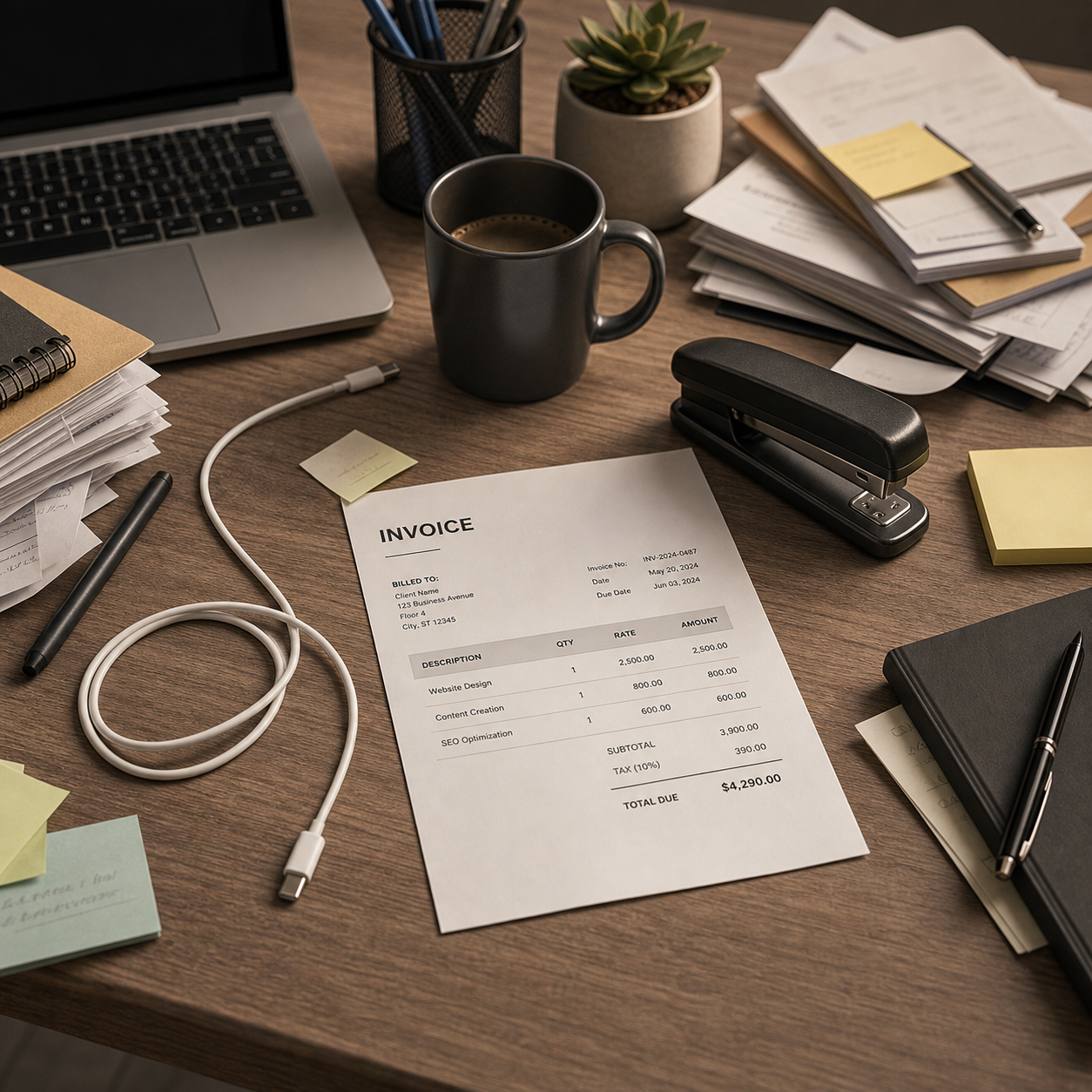
1. Object hunt / Real life
B2Find the target objects in the scene
Pronunciation check: Find these objects in pharmacy shelf: stapler, invoice, charging cable.
Best answer
stapler / invoice / charging cable
Mini explanation: This visual vocabulary item checks whether the learner can connect object words to a messy real-life scene quickly.
Report signal: Visual search makes vocabulary feel like a game.
2. Multiple choice / Real life
B2Choose the basket that satisfies the request
Pronunciation check: Buy medicine that does not make you sleepy with $12 using a train-station kiosk.
Best answer
Non-drowsy cold medicine and water.
Mini explanation: Shop simulator items test whether the learner follows category, budget, and purpose constraints in English.
Report signal: Short, diagnostic, and reusable across tests, funnels, and practice loops.
3. Sentence order / Real life
B2Tap the actions in the correct order
Pronunciation check: Follow the English instruction sequence.
Correct order
open the settings tap privacy turn off location sharing
Mini explanation: Instruction following checks whether the user can process action order in English, not just recognize individual words.
Report signal: Short, diagnostic, and reusable across tests, funnels, and practice loops.
4. Multiple choice / Naturalness
B1Decide fast: natural or translated?
Pronunciation check: "She explained me the rule"
Best answer
Unnatural
Mini explanation: "She explained me the rule" sounds translated. Better: She explained the rule to me.
Report signal: A quick swipe that exposes translated English instantly.
5. Audio choice / Naturalness
B2Listen and choose the word you hear
Pronunciation check: Did you hear leave or live?
Best answer
live
Mini explanation: The target audio is "live". This generated-vault item isolates one sound contrast so the report can separate listening from spelling.
Report signal: One tiny sound makes the question feel risky and shareable.
Feedback experience
What the user gets after finishing
Skill map
Scores by the exact skills this test touched.
Pattern diagnosis
Repeated weak patterns grouped into readable cards.
Next move
Follow-up tests and practice steps based on misses.